
The Futures We Create: Democratizing the Imagination of the Future — Robert Wood Johnson Foundation (RWJF)

Overview
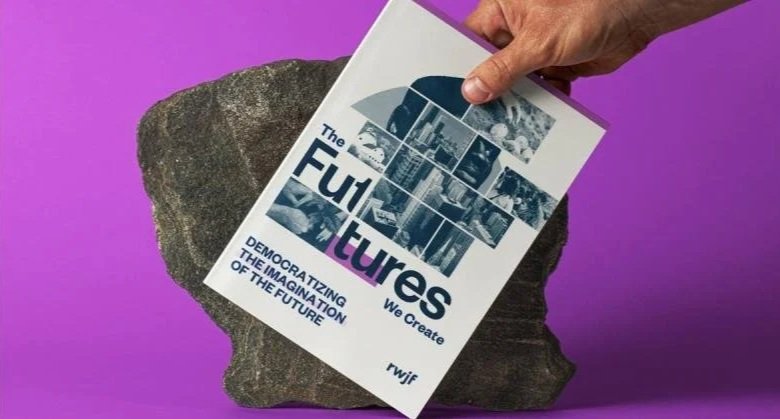
The Robert Wood Johnson Foundation commissioned this report to share what it had learned from years of funding futuring practitioners — artists, organizers, social workers, youth leaders, and visionaries who are expanding who gets to imagine what's possible. It was authored by our late founder, Jessica Clark, and shaped with the Dot Connector team. The report is both a strategic roadmap and a call to action for the philanthropic sector: rethink who holds the power to envision tomorrow. Its core thesis is one we return to again and again in our own work — the future isn't a fixed destination we passively arrive at. It's a reality we actively create, together, through the choices and stories we hold today.
Strategy
This report grew out of a deeply collaborative, two-year sensemaking process, not a top-down research sprint. We used a mixed-methods approach because the findings needed to be grounded in what practitioners are actually living, not just what theory suggests:
Field Scanning: Over two years, our research team gathered and curated signals and futures resources through organic research and snowball sampling, mapping the intersections of foresight, strategic visioning, social change, racial equity, and philanthropic practice.
In-Depth Interviews: Jessica Clark and Research Associate Jenna Rines conducted and analyzed one-on-one interviews with 17 diverse leaders connected to current and past RWJF grants. We selected these leaders using RWJF's RFP guidelines as a baseline, with a specific eye toward organizations already doing serious work in foresight and futuring.
Collaborative Feedback Loops: We didn't want this to be an extractive process. So we brought our early findings back to the community — inviting interviewees and other grantees into group conversations to react, push back, and shape what we were seeing. The final synthesis took form over months of ongoing dialogue with these practitioners and RWJF's Futures team.
Key Insights
The report surfaces a hard truth: the power of foresight is concentrated among those who already hold structural power and resources. When communities on the margins are shut out of these practices — often because survival mode leaves no room for the luxury of time and space to dream — we end up recycling "used futures" that replicate old harms and keep the status quo intact. Drawing on insights from 17 practitioners — social workers, organizers, and speculative worldbuilders among them — the report offers a framework for weaving radical imagination and trauma-informed, somatic restoration into philanthropic practice.
Impact
The report gives philanthropic partners real, actionable pathways beyond reactive, crisis-driven investment. It makes the case — one we believe deeply — that true health equity means structurally resourcing frontline leaders, artists, and organizers with the time and tools to dream, and recognizing them as the primary architects of pluralist, thriving communities.