
What questions is the Dot Connector team thinking about with our partners?
THE WORLD INSIDE:
What are we doing?
〰️
What do we want to do?
~
What can we do?
~
What are we doing? 〰️ What do we want to do? ~ What can we do? ~
How do we feel?
〰️
Who do we need to become?
~
What is dragging us down?
~
How do we feel? 〰️ Who do we need to become? ~ What is dragging us down? ~
What are the stories, data, and beliefs we hold true?
〰️
What is our relationship with power, people, and resources?
~
What are the stories, data, and beliefs we hold true? 〰️ What is our relationship with power, people, and resources? ~
THE WORLD OUTSIDE
What is happening around us in seen and unseen places?
〰️
What might happen in the world that’s emerging?
~
What is happening around us in seen and unseen places? 〰️ What might happen in the world that’s emerging? ~
What are we up against?
〰️
Who is rolling with us?
~
How will people respond to our choices?
~
What are we up against? 〰️ Who is rolling with us? ~ How will people respond to our choices? ~
How will power and resources shift because of our actions?
〰️
What stories, data, and beliefs exist in the system around this work?
~
How will power and resources shift because of our actions? 〰️ What stories, data, and beliefs exist in the system around this work? ~
Our Approach
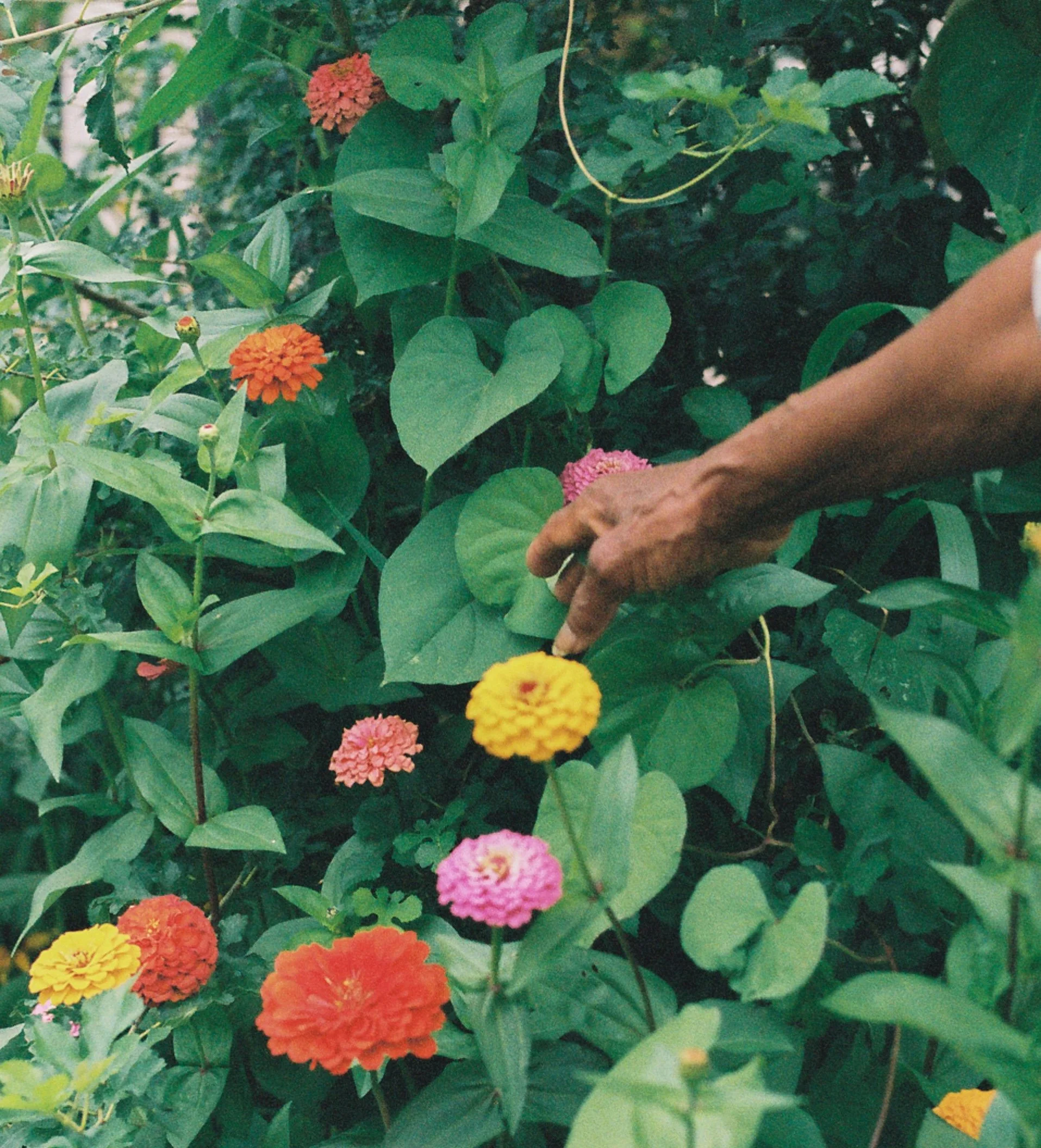
We lead people and organizations through futures learning—growing the capacity to understand, anticipate, prepare for, and embrace what's ahead.
We meet you where you are. Some clients arrive fired up about a new direction. Some arrive burnt out. Some have capital but no strategy; others have strategy but no spark. Wherever you start, we build a route toward the outcome your moment calls for.
Our work starts with rigorous qualitative research: field scans, ecosystem mapping, and signal spotting processes that tell us not just where the field is headed, but where it actually stands today. Depending on a client’s specific goals, our work takes a variety of forms—from a strategy process that leads to a new theory of change, to a futures learning journey that takes a cohort through a series of futuring workshops and activities over a period of time, to more creative and form-breaking engagements.
We show up as true partners: meticulous about project management, curious and collaborative in our research, and bringing real care to the people doing the work. And we promise to make it fun and engaging along the way!
The resilience that can result from future-proofing is where much of the value can be found.
— Royal Society of the Arts
Our Work in Practice: Selected Projects
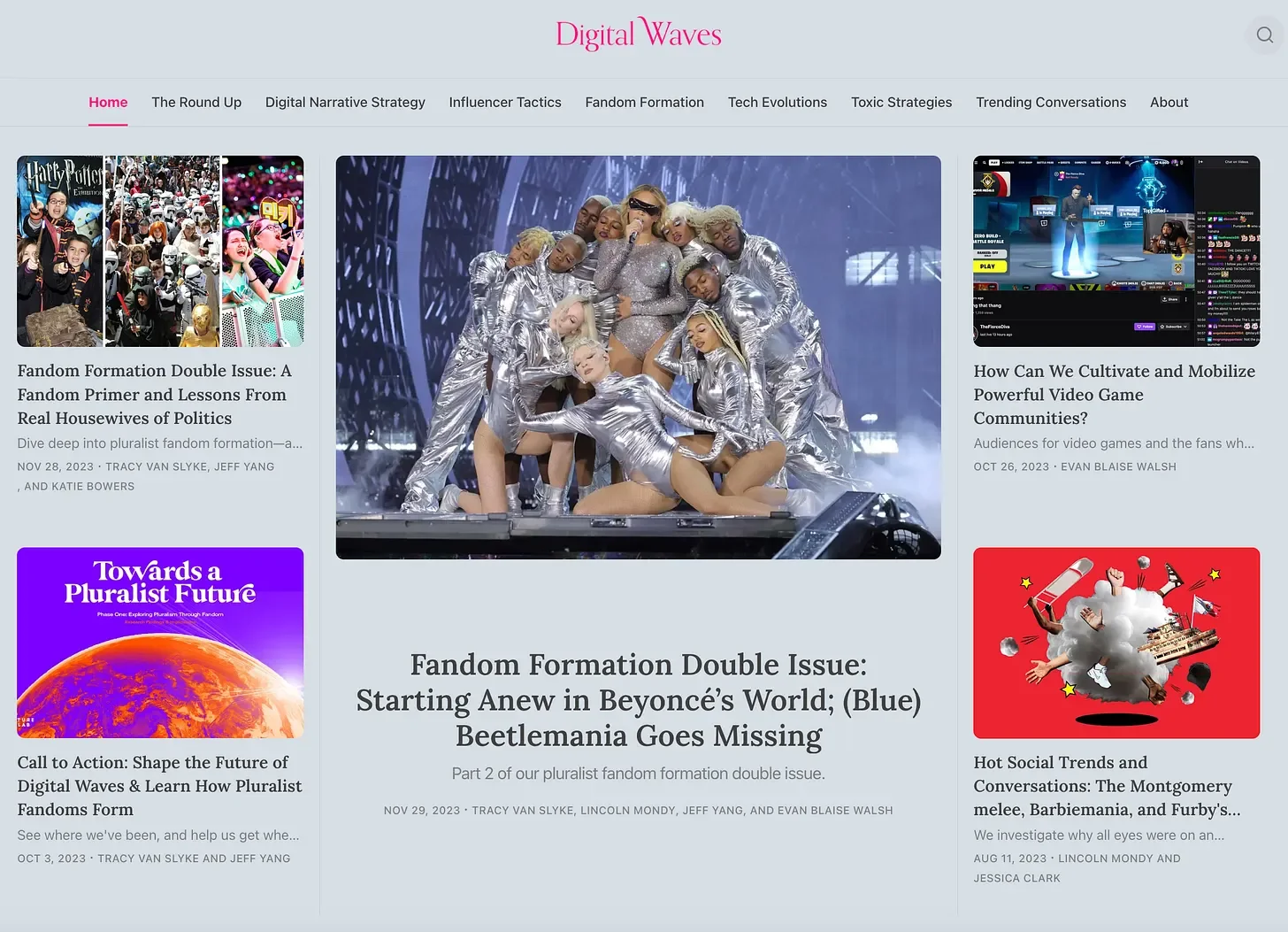
Digital Waves
In partnership with the Pop Culture Collaborative (PCC) we launched Digital Waves, a time-bound learning journey and digital bulletin designed to guide pop culture narrative change leaders and philanthropic partners through the rapidly shifting currents of digital communities and culture. This initiative supports the field in creating and strengthening expansive, resilient, and pluralist digital environments where millions of people can safely imagine, organize, and make meaning every day. Through Digital Waves, we have provided narrative intelligence to help field leaders navigate complex trends, including fandom formation, digital safety, and the rapid decay of digital platforms, and most recently, led research for a four-part series on the best strategies for funding digital creators.
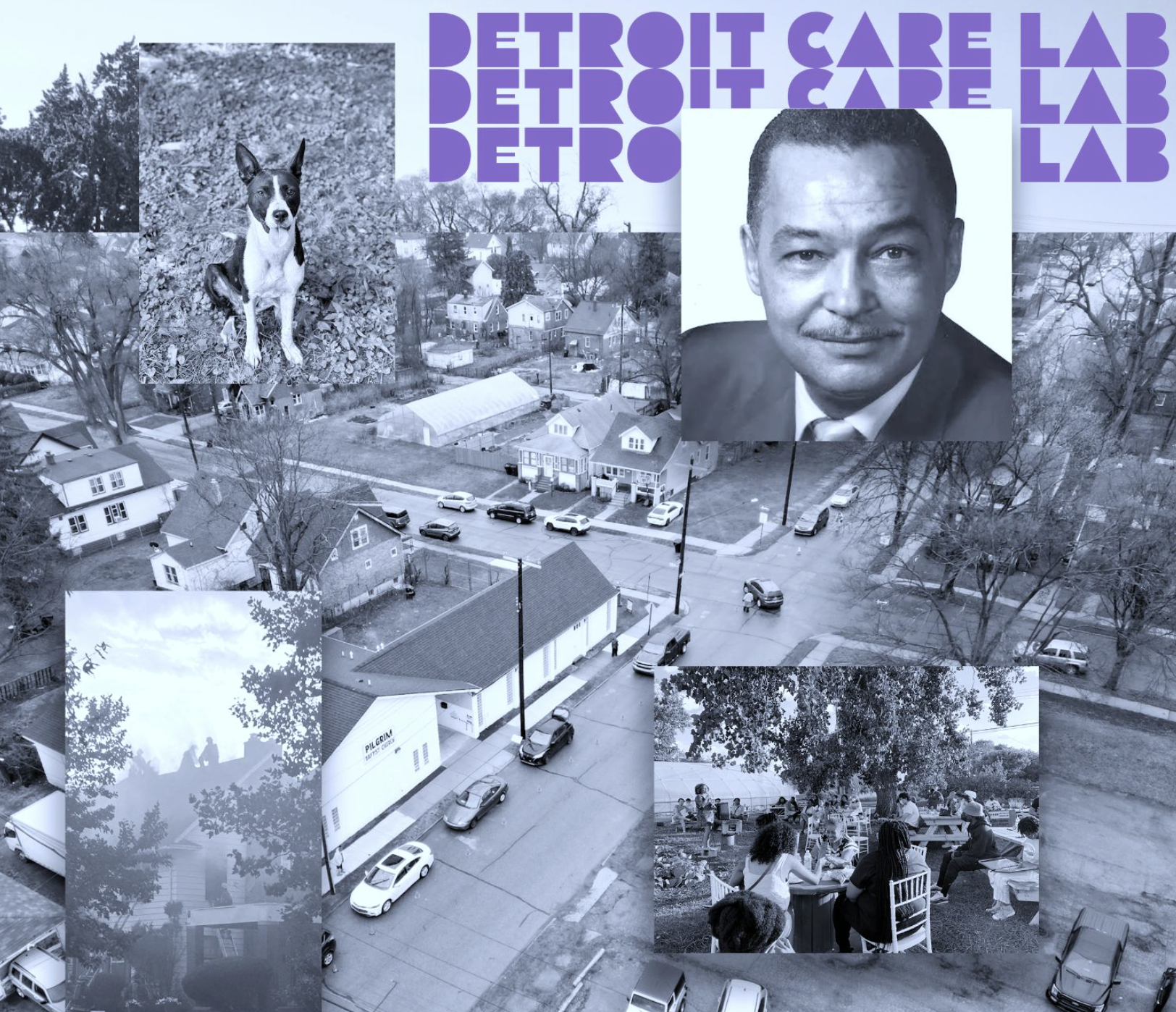
Detroit Care Lab
Our work with the McGregor Fund centers on the Detroit Care Lab— a space where radical imagination, strategic foresight, and collective care come together to build a more equitable future for Detroit. Together, we're moving beyond the traditional, crisis-driven "social safety net" toward something more interdependent: an ecosystem of care. The Lab is a futures learning initiative convened with and for McGregor’s grant partner community, designed to create a safe and inspiring space to rest, dream, and imagine Detroit's future. We rooted the practice in a recognition that community organizers, nonprofit leaders, and social change practitioners operating in Detroit are navigating an extraordinary moment defined by political uncertainty, cascading crises, and the ever-present risk of burnout. This work celebrates the (often under-resourced and under-recognized) deep wells of imagination, cultural power, and visionary community practice that are the heartbeat of Detroit.
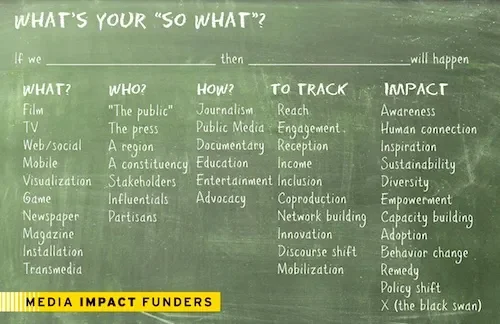
Media Impact Funders
In our long-running partnership with Media Impact Funders (MIF), our team played a foundational role in building out MIF's impact assessment work, growing what began as a shared interest in evaluating mission-driven storytelling into one of MIF's signature program areas. We spearheaded the launch of MIF's Assessing the Impact of Media (AIM) initiative, producing a monthly media impact newsletter, a searchable impact research library, and a core measurement framework that shaped the field's thinking. This work culminated in Decoding Media Impact: Insights, Advice & Recommendations, a synthesis of seven years of field research authored by Katie Donnelly and presented at the Sundance Film Festival.
We also led the Media Impact Festival's evaluation process, assessing high-impact documentary films across a series of quantitative and qualitative metrics and writing widely shared case studies for each film. More recently, Dot Connector team members worked with MIF to conduct a global journalism funding research scan supported by the Gates Foundation, surveying the state of the field and translating on-the-ground practitioner insights into synthesis funders could act upon.
We use a variety of tools and methods to help us explore multiple possibilities, manage risk, scenario plan, exercise optimism in the face of uncertainty, and examine paths toward an equitable tomorrow.
A strong research thread runs through our practice—helping us understand not just where we're going, but where we are now.
That grounding shapes how we practice futures work: merging a broad range of disciplines and traditions to reveal how collective transformation depends on the relationship between "I" and "we.” Turning our visions into shared reality requires change at every level, starting with each of us adpoting a healthier, more resilient relationship with the future.
Our Methods
-
Before we imagine what's next, we work to understand what's happening now. We use a variety of research methodologies, including participatory and collaborative research. Our research practice draws on:
Field scanning & landscape studies
Ecosystem mapping
Interviews & case study development
Impact evaluation & measurement framework design
Curriculum & tool development
Our research process helps us surface who's doing the work, what's working, what's missing, and how power, resources, and relationships move through a system. Our research outputs tend to be creative—tools, curricula, even games!—rather than reports that sit on a shelf.
-
Foresight (or Strategic Foresight) is the rigorous, interdisciplinary practice of anticipating possible future developments and designing interventions to meet them. Rather than trying to predict a single outcome, it is an organized and systematic process used to engage with uncertainty, look beyond the expected, and improve decision-making today by exploring a variety of alternative futures. Foresight is often rooted in rigorous analysis and hypothesis, working on hunches about potential futures and sensemaking trends from data, facts, reporting, and science. We frequently use Horizon Scanning and Scenario Planning as part of our Foresight Practice.
-
Radical Imagination is the ability to conceive of new possibilities outside of the constraints and structures of the present, and applying this to challenge oppressive systems and envision just, transformed futures. [Sources: Hill-Jarrett, Haiven & Khasnabish, Everyday Activism Network].
Visioning (or Speculative Visioning) is the specific act of creating those imaginative futures to challenge dominant assumptions and provoke new possibilities for action in the present. Visioning often relies on creative practices to help participants "feel" their way into alternative paradigms where all communities can thrive.
We take a Liberatory Futures approach, which refers to futures where interlocking systems of white supremacy, colonialism, and other oppressions are dismantled, and where the freedom and thriving of people most impacted by these systems are centered and affirmed. Liberatory futures are enacted through enduring imagination and action to resist, abolish, and transform harms that these systems cause. [Sources: Nassiri-Ansari et al., Wilson, Gumbs, O’Brien & Simon, Shillingford, Takla, Priyadharshini]
-
We create imaginary worlds or settings, often irresistible future realities in which we dream of a sovereign future for ourselves. We use speculation to consider aspects of otherworldly or possible futures. This work often creates speculative fiction—an expansive genre that explores alternative, nonrealist ways of being to provoke thought—and the creation of Artifacts. An artifact is a tangible or conceptual representation (such as an object, text, or piece of art) of an imagined future, designed to make that potential world more concrete, experiential, and accessible for reflection.
-
From the work of Otto Scharmer in the Presencing Institute’s Theory U: Leading from the Future as It Emerges and also the work of the Guild of the Future Architects, we embraced a framework for leadership and organizational change that focuses on shifting awareness to co-create a better future, moving from ego-system to eco-system thinking.
In this model, we start with coaching, group cohesion, personal transformation, mindfulness, and embodiment practices that support undoing what blocks us. This invites us to let go of our blocks and turning it into compost for what we want to embody, enact, and perform in a new system that feels whole.