Media Futurist · Journalist · Dot Connector
1971-2025
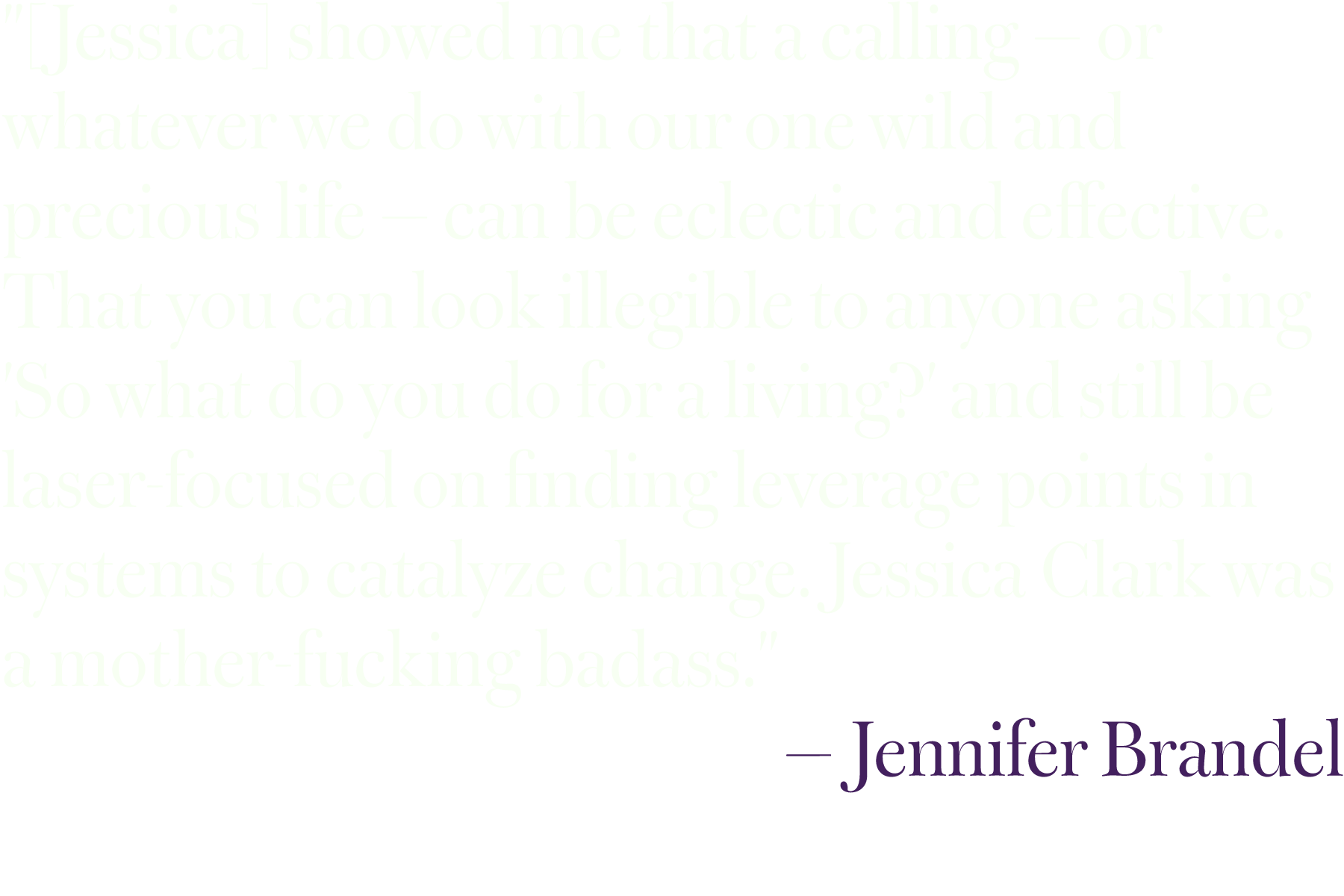
Jessica Clark was perpetually ten steps into tomorrow. A media futurist, journalist, and strategist, she spent decades working at the intersection of art, technology, and politics; always ahead of the moment, always pointing toward what could be.
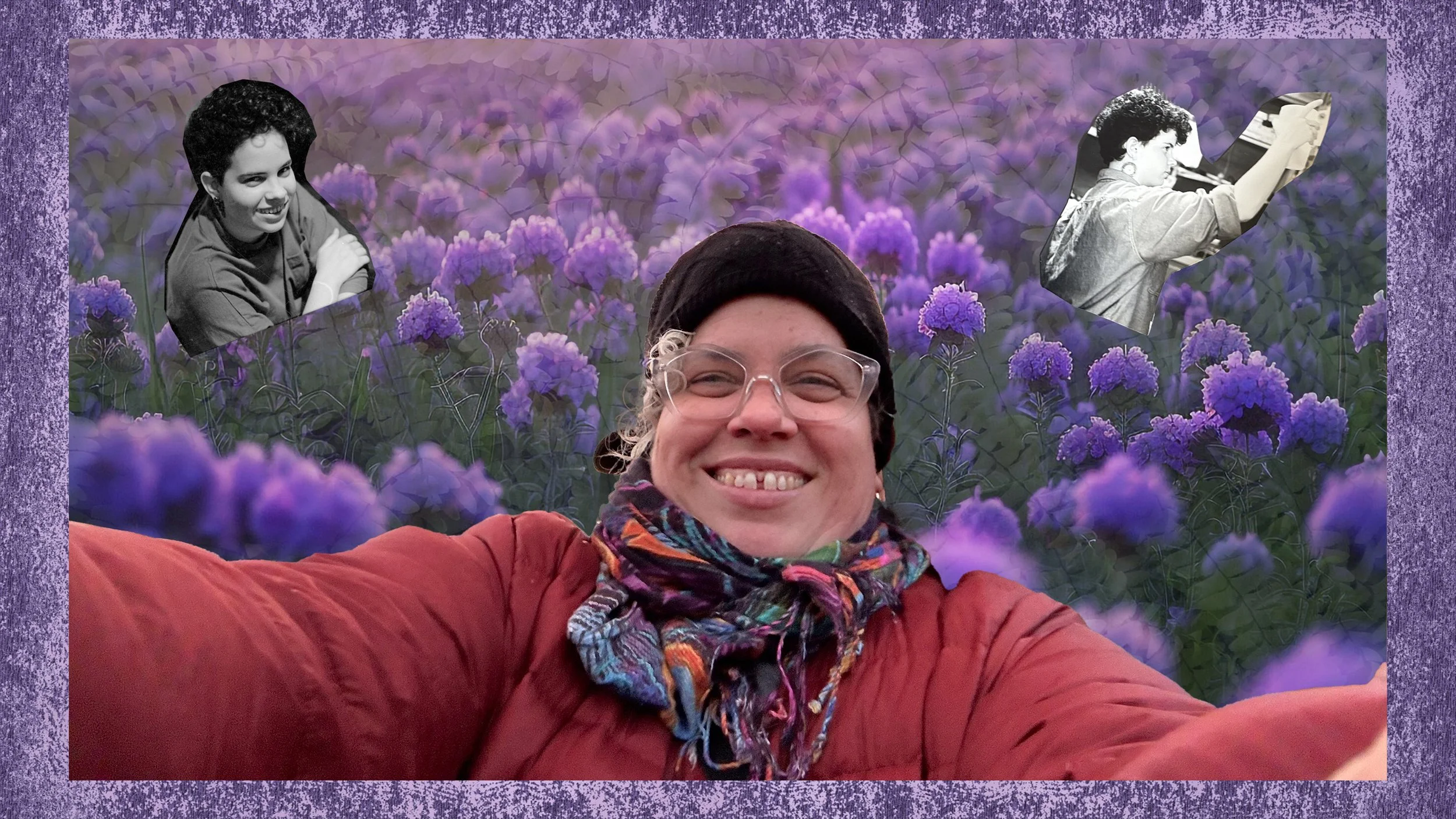
In 2013, Jessica founded Dot Connector Studio with Katie Donnelly. Dot Connector’s founding mission—to "collaborate with cool people to make cool things that matter"—said everything about how Jessica worked. DCS was never a conventional workplace. It was a sanctuary for a much larger network: a deliberate, ongoing act of support for storytellers, visionaries, and thinkers, with a particular focus on mentoring and advocating for women who had been undervalued or cast aside by the journalism and tech industries.
Jessica was prescient about the long arc of technology. A decade ago, she predicted what is now obvious: a widespread resurgence in analog formats—vinyl records, cassettes, film photography—arguing that the human desire for the tangible and the face-to-face would complicate any vision of a fully-digitized future. She was among the earliest voices in her field to think seriously about the long-term civic and commercial implications of artificial intelligence, and among the first to use futuring concepts to explore how communities could imagine and build more equitable futures together.
She had no interest in chasing trend cycles or dispersing her energy across hot topics. As she put it, that kind of motion is "part of capital and the speculative stock market… it's not true to what I care about." What she cared about was durable: equity, imagination, community, and the long, unglamorous, essential work of building futures worth inhabiting.
The Making of a Futurist
From her childhood days reading science fiction, Jessica cultivated an imaginative relationship with the future that would define her life's work. At the University of Chicago, where she earned both her BA and MA, she wrote a critical thesis on the gender politics of cyberpunk literature, an emerging genre in the early 1990s that would go on to shape a generation of thinkers. This was classic Jessica: ahead of the moment, working at the margins of what the culture had yet to name.
Her career began in progressive journalism. As executive editor of the national news magazine In These Times, she developed a keen sense of how media shapes public life. From 2007 to 2011, she led the Future of Public Media Project at American University's Center for Media and Social Impact, where she became a defining voice in reimagining what public media could be—and where she first met Dot Connector Studio cofounder Katie Donnelly.
In 2010, Jessica and Tracy Van Slyke published Beyond the Echo Chamber: Reshaping Politics Through Networked Progressive Media(The New Press), exploring independent media networks and participatory democracy in ways that have shaped the field ever since.
In 2016, Jessica co-founded Immerse, a publication developed with MIT's Open Documentary Lab and the Tribeca Film Institute, creating an international hub for creative conversation at the intersection of technology, art, and social justice. In 2020, she co-authored Making a New Reality: A Toolkit for Inclusive Media Futures with Kamal Sinclair. She held fellowships at USC Annenberg's Norman Lear Center and the New America Foundation, and served as a research affiliate at MIT's Open Documentary Lab. She conducted research and convenings with NPR, PBS, Harvard's Berkman Center for Internet and Society, USC Annenberg, and MIT. From 2022 to 2023, the Robert Wood Johnson Foundation named her futurist-in-residence, a title she used to describe herself and her work for the rest of her life.
A Dot Connector, In Every Sense
Jessica had a rare ability to synthesize extraordinarily complex ideas with speed and clarity, drawing on decades of experiential knowledge in ways that no tool or technology can replicate. She brought people into fields they didn't know they belonged to, bridged gaps between sectors, and created pathways for others to follow. The vast body of work she leaves behind represents decades of insisting that the future could be imagined differently: more equitably, more collectively, more joyfully.
Jessica built community everywhere she went. She developed deep intellectual partnerships that were also deep friendships, people who were not just colleagues but dear friends, fellow travelers in the work. She was passionate about the people doing this work, even as she would insist, against all evidence, that she wasn't a people person. She paid extraordinary attention. She remembered. She gave, as those around her understood, so much.
She left behind not just a remarkable body of work, but a living, breathing network of thinkers and makers she had spent a lifetime connecting. She was, in every sense, a dot connector, and she continues to connect us, now as our ancestor.